
 EN
 DE
 FR
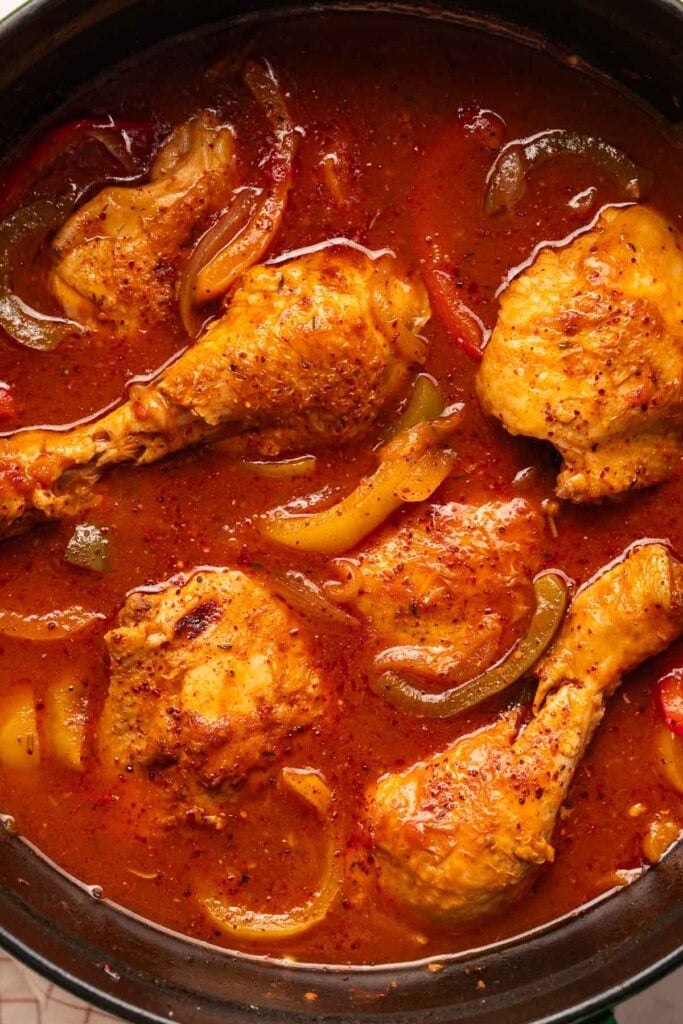
Poulet Basquaise (Basque Chicken with Pepper)


Jump to
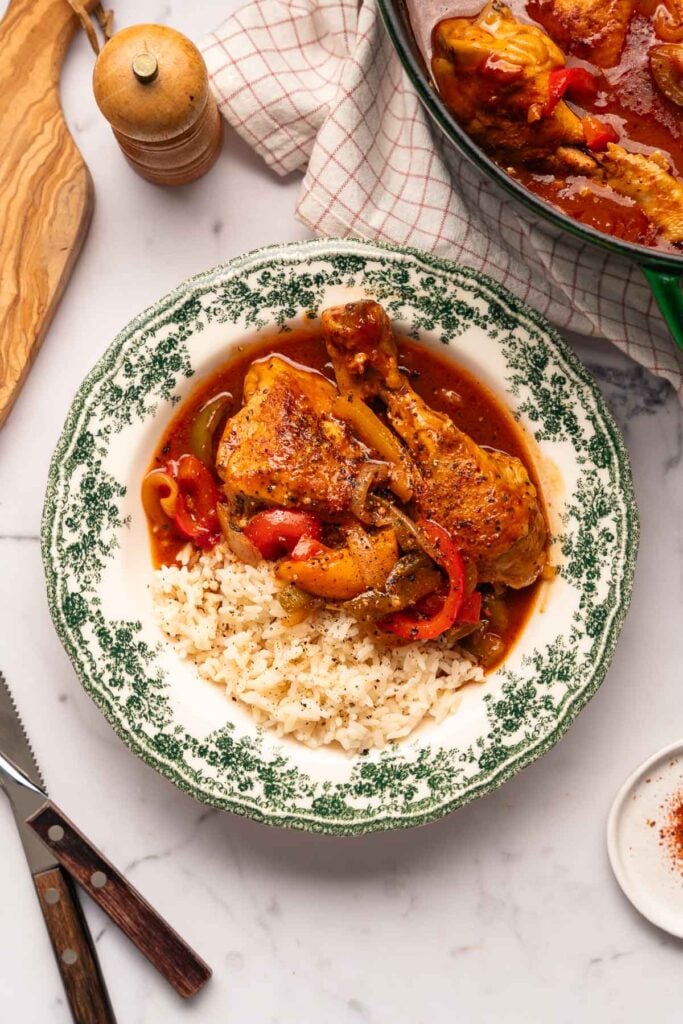
An emblematic dish of Basque cuisine, Poulet Basquaise (Basque Chicken with Pepper) is one of my favorite French classics ! It’s chicken simmered in a rich sauce of peppers, tomatoes and a mild French chilli called Espelette pepper, perfect for a healthy yet comforting meal.
And if, like me, you like slow-cooked dishes, check out my recipe for White Bean and Tomato Stew with Spinach or my Mushroom Bourguignon.
What is Poulet Basquaise ?
Poulet Basquaise is a traditional dish that originated in the Basque region in South-west of France France close to Spain. It is one of the most popular casserole dishes in France.
What sets it apart is the piperade, a preparation of peppers, tomatoes, onions and garlic, which serves as a sauce to accompany the chicken.
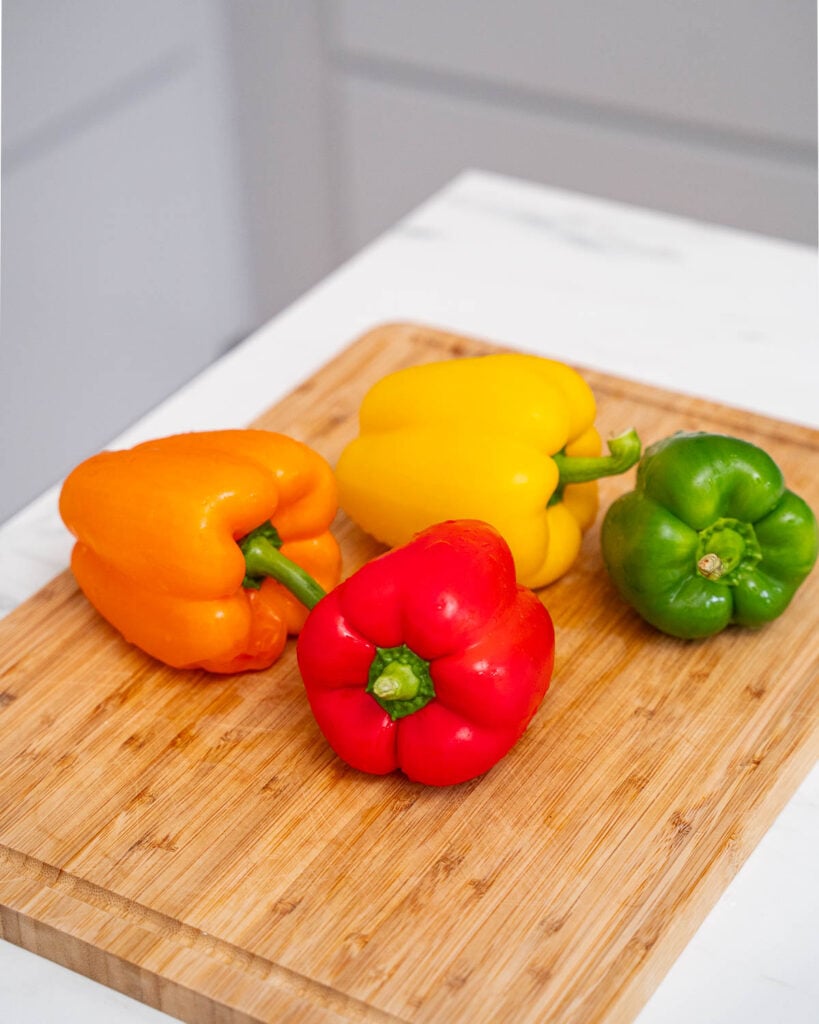
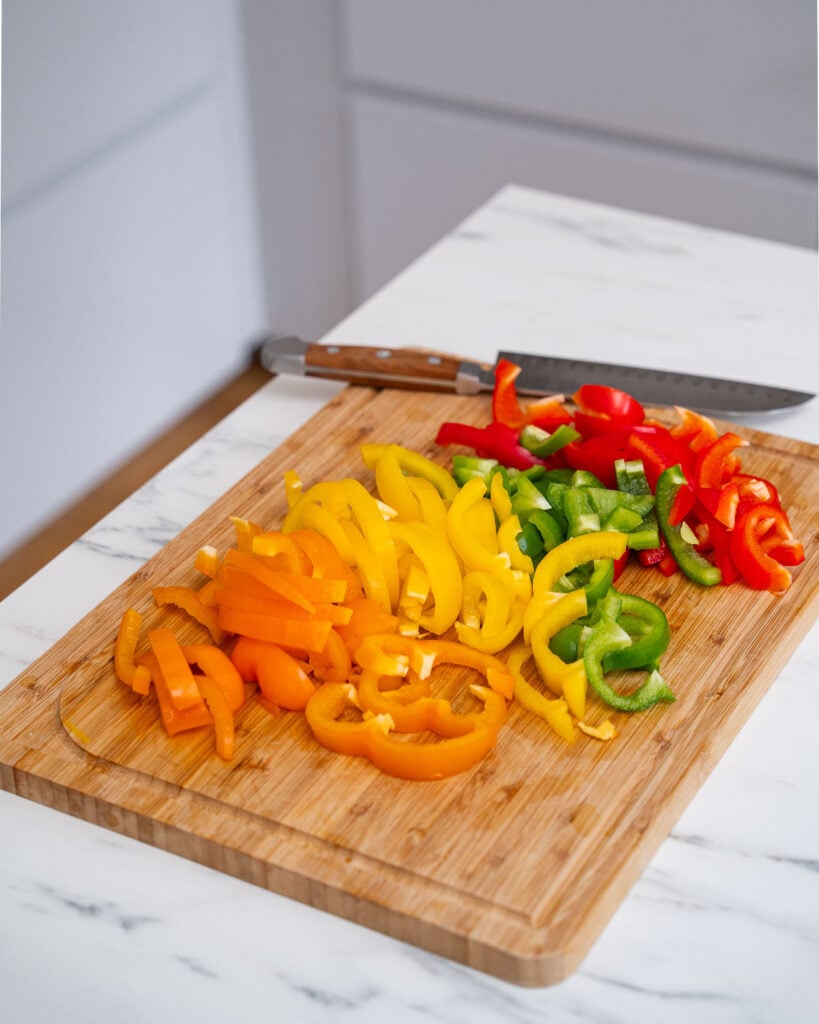
Peppers are often called pipérade in the Basque Country, hence the name of the preparation. Espelette pepper, another regional specialty, a mild ground chili spice, adds a touch of spiciness to the dish, adding an extra dimension to the Basque chicken.
Ingredients for Poulet Basquaise
Here are the main ingredients you need to make a delicious Poulet Basquaise.
- Chicken thighs: Perfect for this recipe as they stay juicy and tender after cooking. You can cut them in half for smaller pieces.
- Bell peppers: The base of the sauce. I recommend using a mix of red, yellow, and green peppers for more color and flavor.
- Crushed tomatoes: Canned (good quality) or fresh when in season — they add depth and richness to the sauce.
- Espelette pepper: A mild chili typical of the Basque Country, it adds just the right amount of heat. If you don’t have it, you can substitute with another chili such as cayenne pepper.
- Dry white wine: Optional, used to deglaze the pan and add a touch of acidity. Can be replaced with broth.
- Broth: Chicken or vegetable broth, to enhance the flavor of the sauce.
The remaining ingredients (herbs, Espelette pepper, tomato paste, flour…) are detailed in the recipe card further down.
How to prepare Poulet Basquaise
Preparing traditional Poulet Basquaise is fairly straightforward, requiring just a little cooking time to let the flavors develop. Here are the main steps to follow:
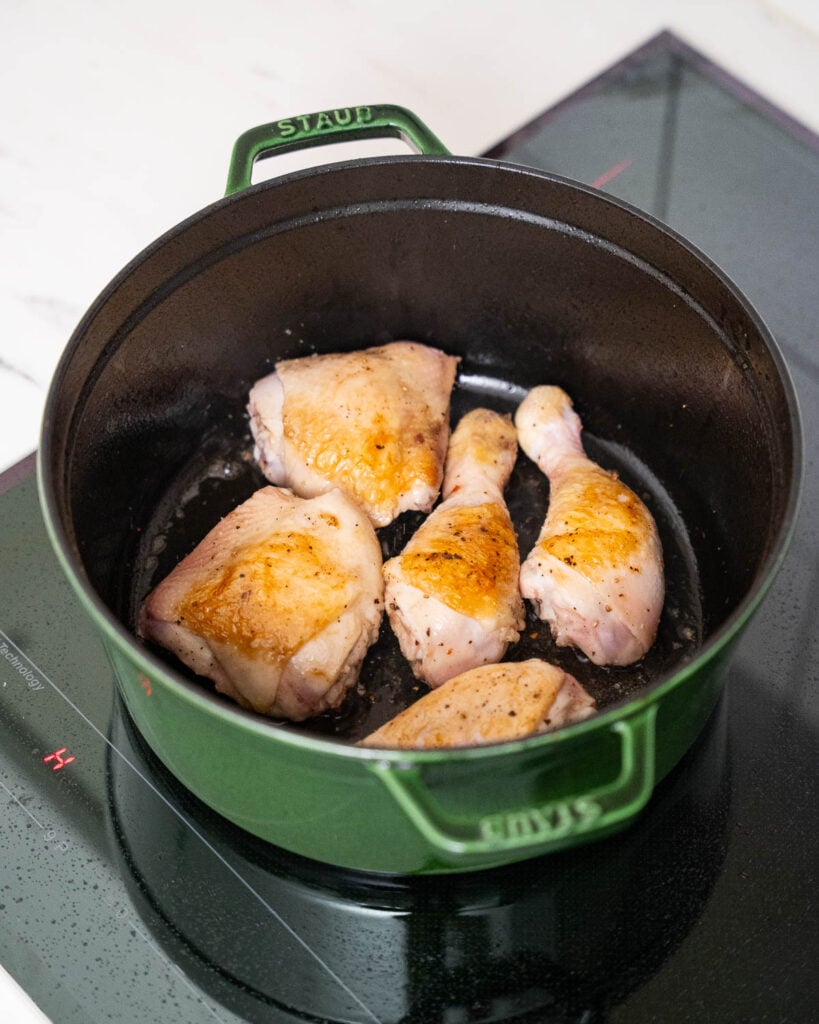
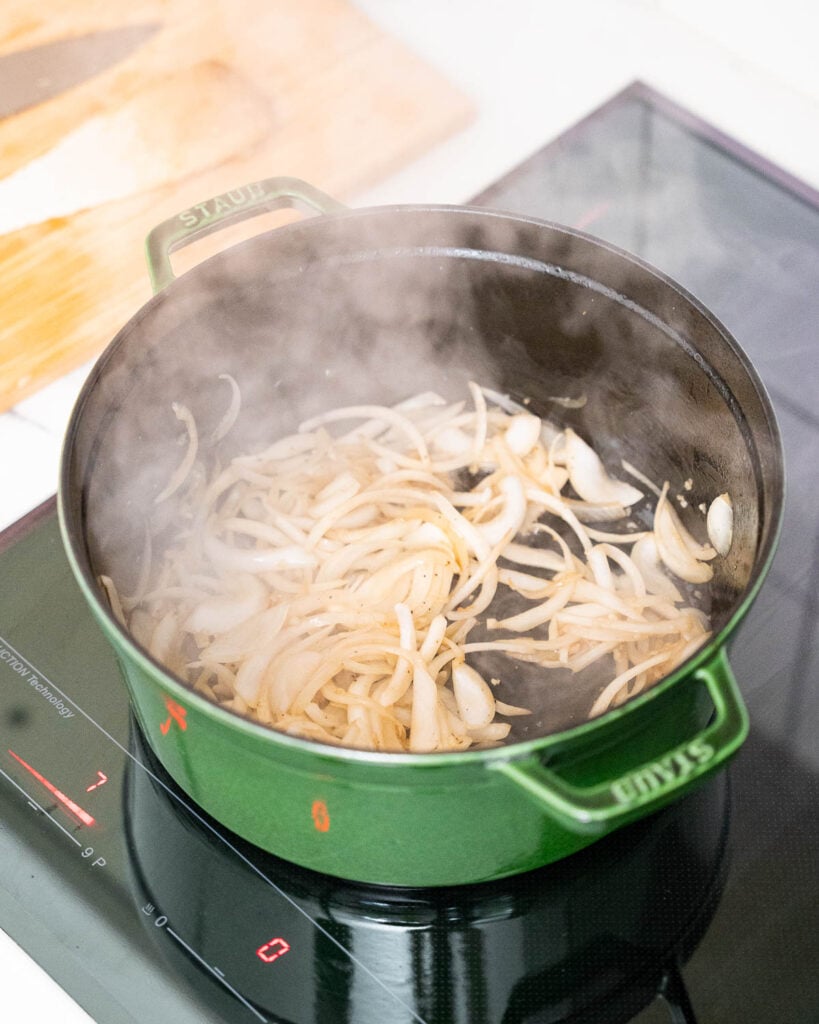
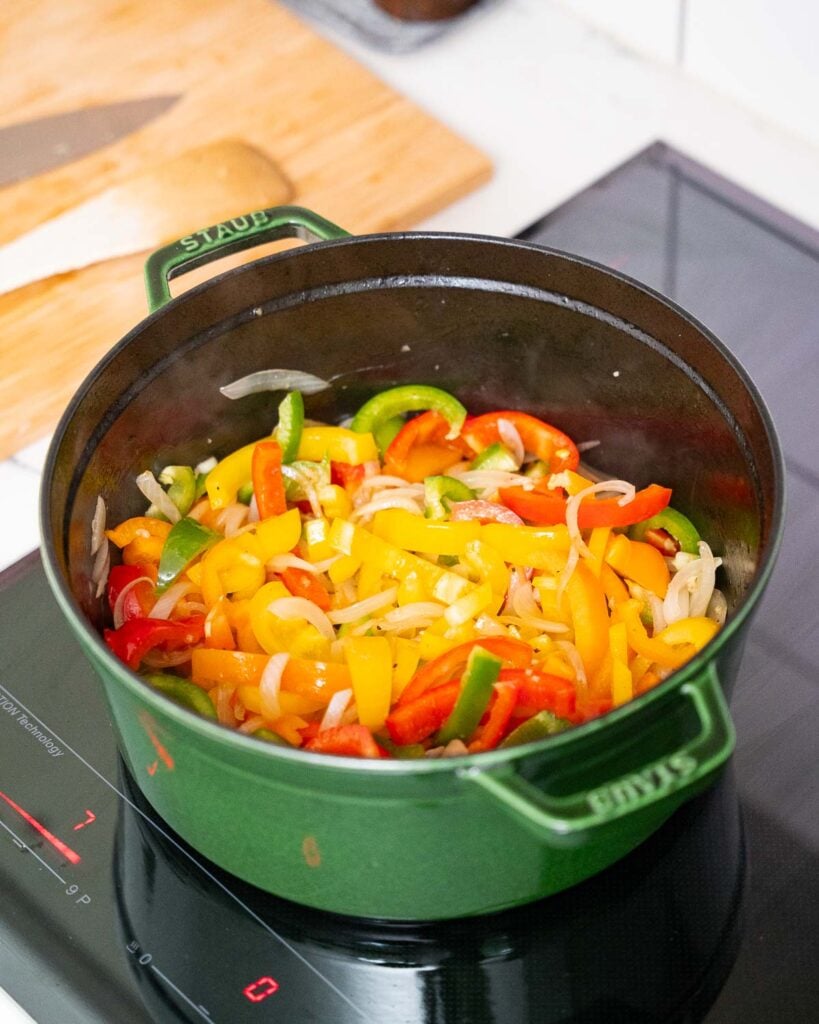
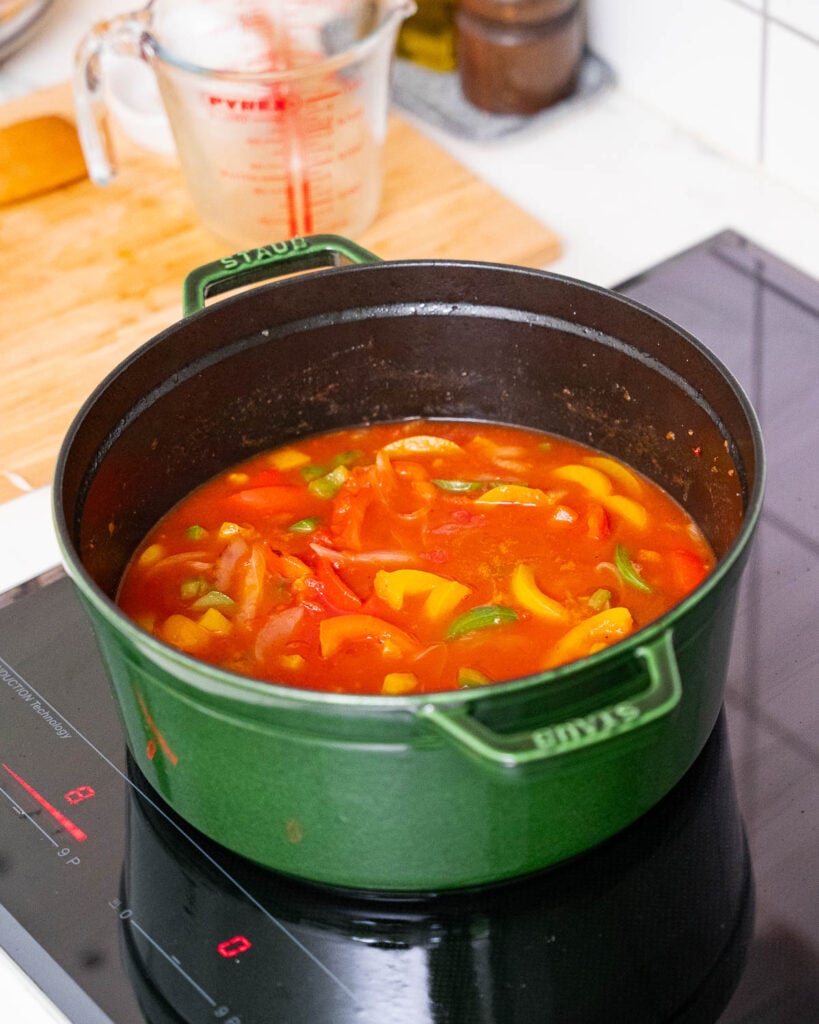
- Prepare and sauté the ingredients: Thinly slice the onion, mince the garlic, and cut the bell peppers into strips. Season the chicken thighs with salt and pepper, then brown them in a Dutch oven with a drizzle of olive oil. Remove the chicken, then sauté the onion, garlic, and bell peppers in the same pot for a few minutes.
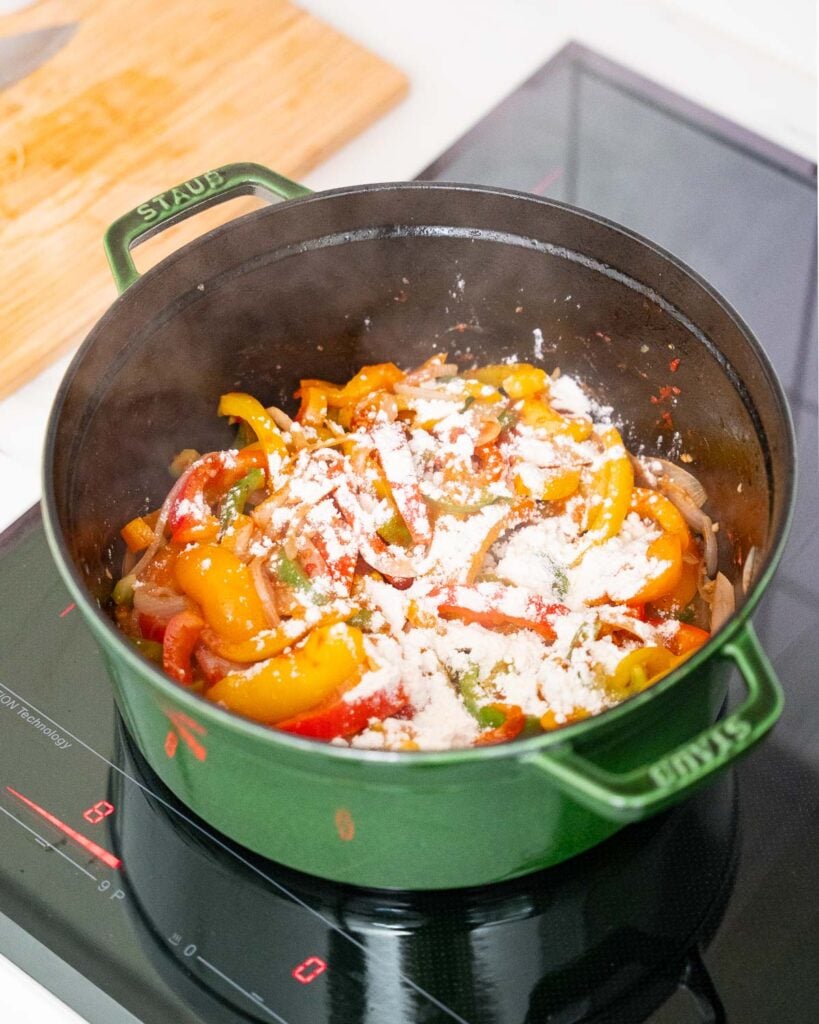
- Prepare the sauce: Add the tomato paste and mix well. Sprinkle with flour. Deglaze with white wine, scraping up the browned bits from the bottom of the pot. Stir in the crushed tomatoes, broth, and aromatic herbs.
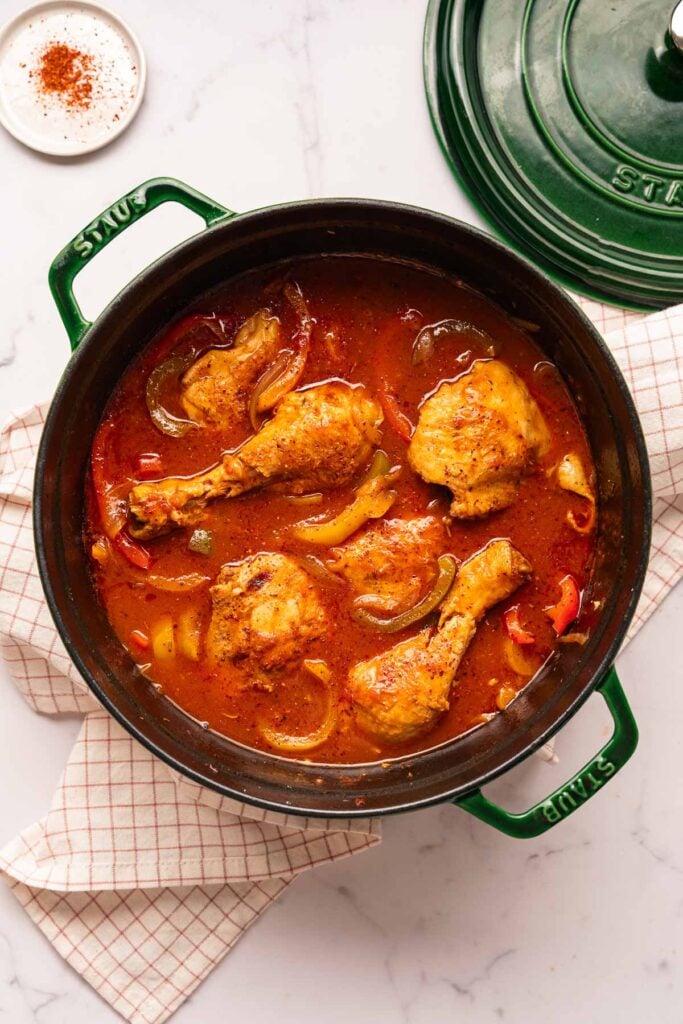
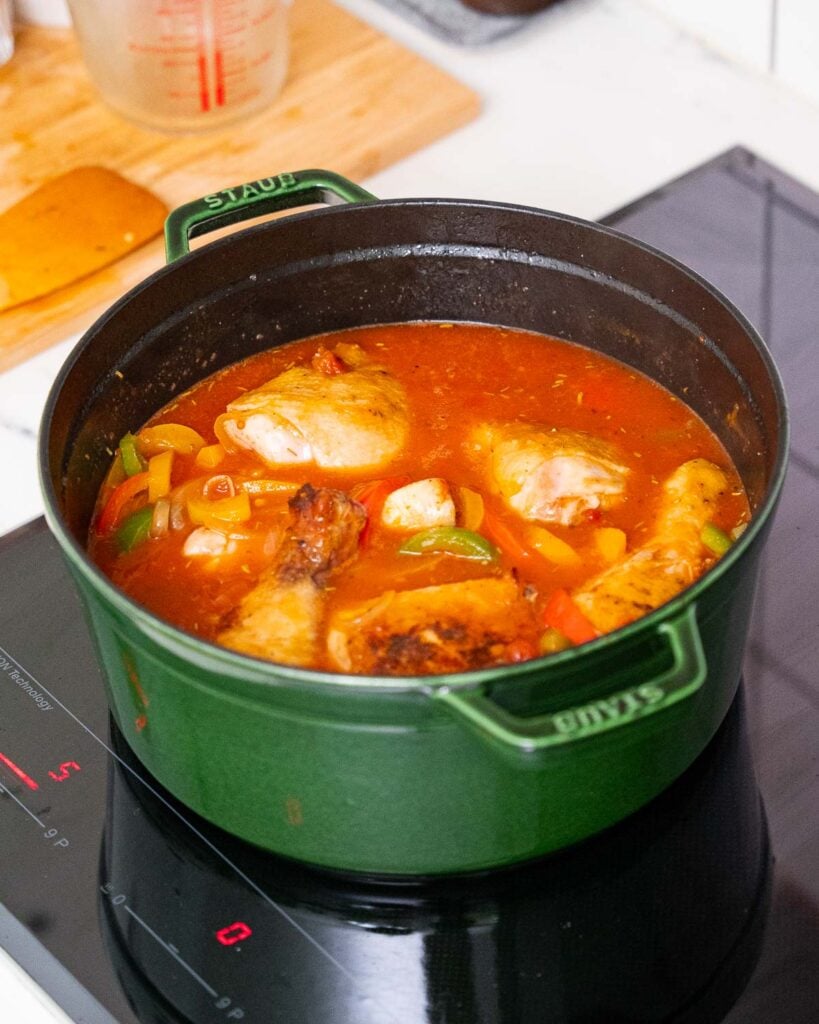
- Simmer: Return the chicken thighs to the pot. Cover and simmer over low heat for 45 minutes to 1 hour, until the sauce has thickened and the chicken is tender. Serve with rice or mashed potatoes!
Tips to make the Poulet Basquaise
Here are a few tips I use to get the perfect Poulet Basquaise every time:
- Sear chicken well: This adds an extra layer of flavor. Take the time to brown chicken pieces well before simmering.
- Use different-colored peppers: Not only does this add color to the dish, it also brings subtle nuances to the taste.
- Slow cooking: Don’t be in a hurry! Let your chicken simmer on a low heat so that all the flavors have time to develop and the meat is tender.
Poulet Basquaise (Basque Chicken with Pepper)
Ingredients
- 4 chicken thighs cut in half at the fold if necessary
- 1 large yellow onion thinly sliced
- 3 cloves of garlic chopped
- 4 peppers yellow, orange, red, green, seeded and cut into strips
- 2 tablespoons tomato paste
- 2 tablespoons flour
- 3/4 cup dry white wine , 200 ml
- 1 can crushed tomatoes ,(14,5 oz or 400 g)
- 1 2/3 cup chicken stock , 400 ml
- 3 sprigs of thyme
- 1 sprig of rosemary
- 2 bay leaves
- Olive oil
- Salt and pepper
- Espelette pepper to taste
Instructions
Prepare the ingredients:
- Mince onion and garlic cloves.
- Remove the seeds from the peppers and cut into thin strips.
Prepare the chicken:
- Season chicken pieces with salt, pepper and a pinch of Espelette pepper.
- Heat a drizzle of olive oil in a large casserole over medium-high heat.
- Sear chicken thighs on both sides until golden and beginning to caramelize.
- Set aside on a plate.
Vegetable cooking and sauce preparation :
- In the same pan, add a little olive oil if necessary and sauté the minced onion over medium heat until it begins to color.
- Add the chopped garlic and sauté for 2 minutes.
- Stir in the sliced peppers and sauté for about 3 minutes, until they begin to soften.
- Add tomato paste, stir, then sprinkle with flour.
- Cook for 2 minutes.
- Deglaze with the white wine, scraping the bottom with a wooden spoon to loosen the juices.
- Pour the crushed tomatoes and chicken stock into the casserole.
- Add thyme, rosemary and bay leaves.
- Season with salt, pepper and a little more Espelette pepper, to taste.
Final cooking :
- Return the chicken to the casserole, dipping them in the vegetable sauce.
- Cook, uncovered, over medium-low heat for 45 minutes to 1 hour, until the sauce reduces and thickens slightly.
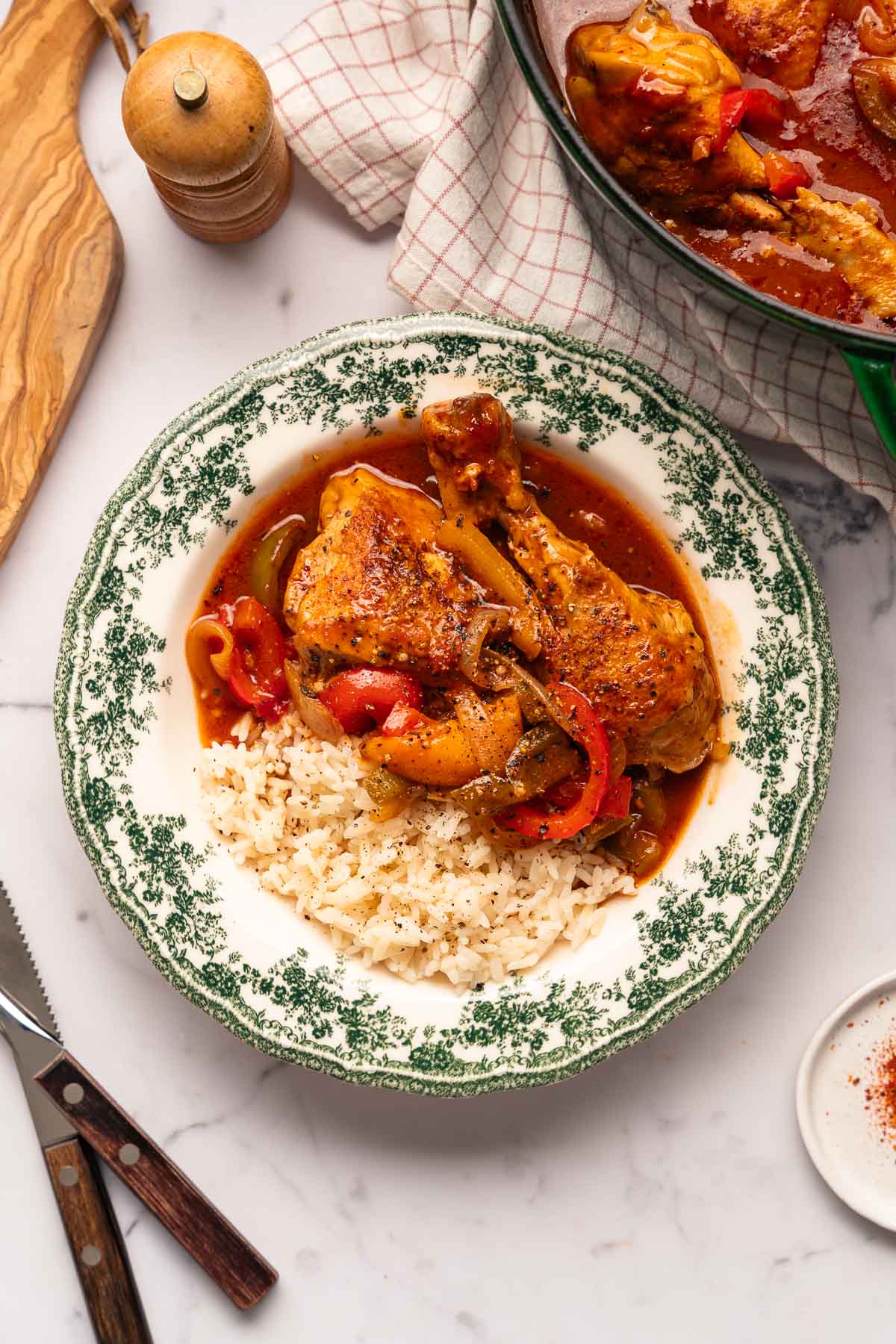
- Serve the Poulet Basquaise warm white rice to soak up the sauce.
Video
Notes
Nutrition facts
Don’t hesitate to leave me a comment, it always makes me happy!

You can also find me on Instagram, Facebook and TikTok to see behind the scenes of my blog
Recipe card
FAQ about Poulet Basquaise
Store leftovers in an airtight container in the refrigerator for 2 to 3 days. When reheating, use low heat to prevent the chicken from drying out. You can also freeze chicken basquaise for up to 3 months.
Chicken Basquaise goes wonderfully well with white rice or steamed potatoes, which will soak up the sauce. You can also serve it with pasta or a creamy polenta to vary the pleasures.
Yes, but be aware that chicken thighs are better suited to long cooking, as they remain juicy. If you use chicken breasts, be sure to adjust the cooking time to prevent them from drying out.
To accompany Poulet Basquaise, a local red wine is an excellent choice. Classically, a nice Basque red wine like Irouléguy will be perfect. If you prefer a lighter red wine, you can opt for one from the Loire region, such as a Saint-Nicolas de Bourgueil. Finally, a rounder, fruitier wine, such as a relatively young Côte du Rhône, will also do very well.
You Might Also Like...


You Might Also Like...
21 Comments

A delicious dish with complex flavors. I made it for a family dinner and it was received with hearty compliments.Merci, Geraldine. Ces recettes me transportent à la France de mes vingt ans où je peux savourer les goûts et souvenirs de ma jeunesse. Quelle joie!
Thank you so much Alice! Je suis contente que cette recette vous ait transportée en enfance 🙂
Made this for tonight’s dinner, and let me tell you I was blown away with the depth of flavor! My husband loved it just as much as I did. I will definitely be making this again and again. The Espelette spice is an absolute must in my opinion. Thank you so much for sharing this wonderful recipe!
Thank you so much, Nicole! I’m so happy you like it so much and also that you found Espelette spice!
Confused as to how many chicken thighs for the Basque. Recipe calls for 4. The pot looks as if it has 3 drumsticks and three thighs. Can you clarify. Thanks!
Hi Sandy, I understand why you are confused! I used 4 chicken legs, that I cut in two at the junction: So I have 4 chicken thighs and 4 chicken drumpsticks 🙂
Merci beaucoup!
Avec plaisir!
C’est délicieux!
Merci, Amy !
Wow! This was so delicious! So simple, easy and budget friendly too! Will be making again!
Thank you, Caitlin !
The flavor was so good and the dish was very light . Had it with rice pilaf . Delicious
Perfect, happy you liked it !🤗
I made this recipe last week. It was delicious, filled with flavor from all the red and yellow peppers plus it had a bit of heat from the piment d’espelette. I will be making this on a regular rotation as the family loved it plus it’s budget friendly!
Thank you for your kind comment Jen !
Wonderful France on a plate .Thank you
This is actually a Review for Géraldine’s Basque Chicken with Espelette & Peppers. I happened to have some Espelette on hand & made this dish last week. OH MY!!! It was absolutely delicious! Great flavors & depth. My husband & son loved it! I served it with rice like she recommended to absorb all the lovely juices. So Good!!
Thank you so much for thus kind comment Judye ! Very happy to hear that 🤗
Last night my husband made this and it was delicious! He replaced the rice with toasted bread and added some mushrooms. Really recommended dish. Thanks so much Géraldine for sharing the recipe!
Happy you liked it 😊
Leave a Reply