
Creamy Lemon and Parmesan Risotto
I learned and perfected this easy recipe for Creamy Lemon and Parmesan Risotto during my time at culinary school in Paris. If this is your first time making risotto, I’ll give you all the important tips!

Table of Content
For a long time, I avoided risotto, a dish I found bland and boring, until I learned the technique for cooking a classic risotto to perfection during my training at the Ferrandi cooking school. I’ve discovered the elegance of risotto and it’s now one of my favorite comfort food dishes!
This lemon risotto recipe is a simple variation of the classic risotto, with the lemon flavor adding freshness to the dish while remaining super simple to prepare.
Ingredients and Alternatives
Here are the ingredients you need to make this creamy lemon risotto.
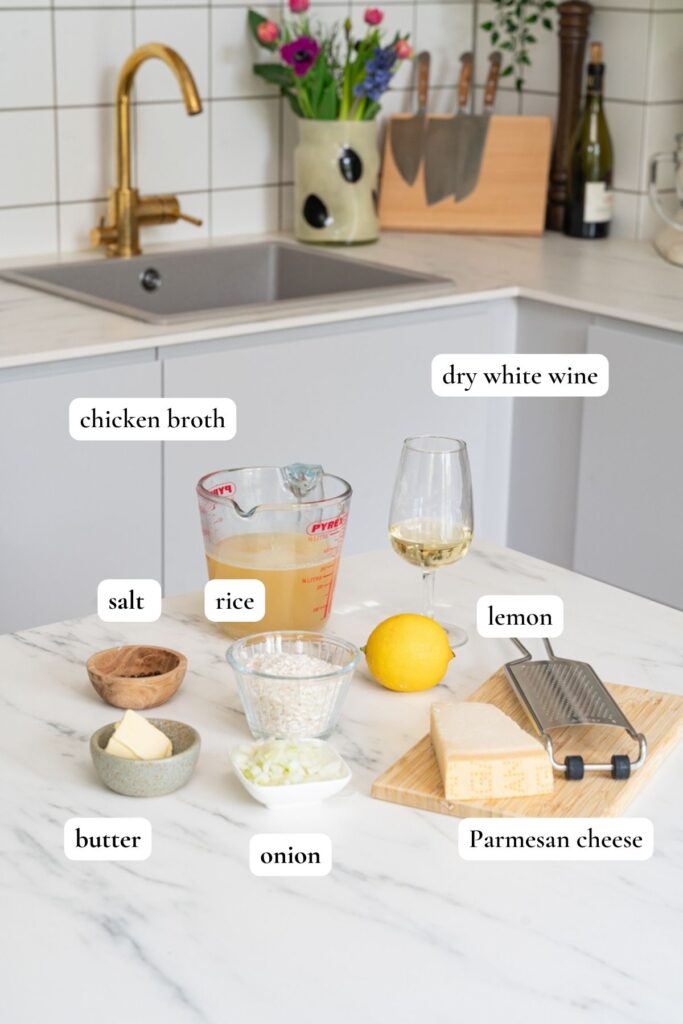
- Rice: You’ll need a special risotto rice such as Arborio, Carnaroli or Vialone Nano. I like to use arborio rice, easy to find and to obtain a creamy texture with it.
- Onion: I use a finely chopped white or yellow onion.
- Dry white wine: It helps to deglaze the pan and brightens the dish with acidity. Choose a dry, affordable white wine such as Pinot Grigio, Sauvignon Blanc or Chardonnay. Replace with broth only if you don’t want to use alcohol.
- Chicken broth or chicken stock: The broth infuses the rice with flavor. Vegetable broth or vegetable stock are great substitutes for a vegetarian version.
- Parmesan cheese: It brings a salty, umami richness to the risotto rice and enhances the creaminess.
- Butter: For sautéing the rice and onion at the beginning, but also to add some creaminess at the end of the dish. Use unsalted butter.
- Lemon: I use both the lemon juice and lemon zest. It provides a bright, citrusy flavor to balance the risotto’s richness.
You will find the exact quantities in the recipe card.
How to Make a Creamy Lemon Parmesan Risotto
Prep and Sauté: Finely chop the onion. In a large skillet, heat a drizzle of olive oil and a knob of butter over medium heat. Gently sauté the onion until soft and translucent, not letting it brown.

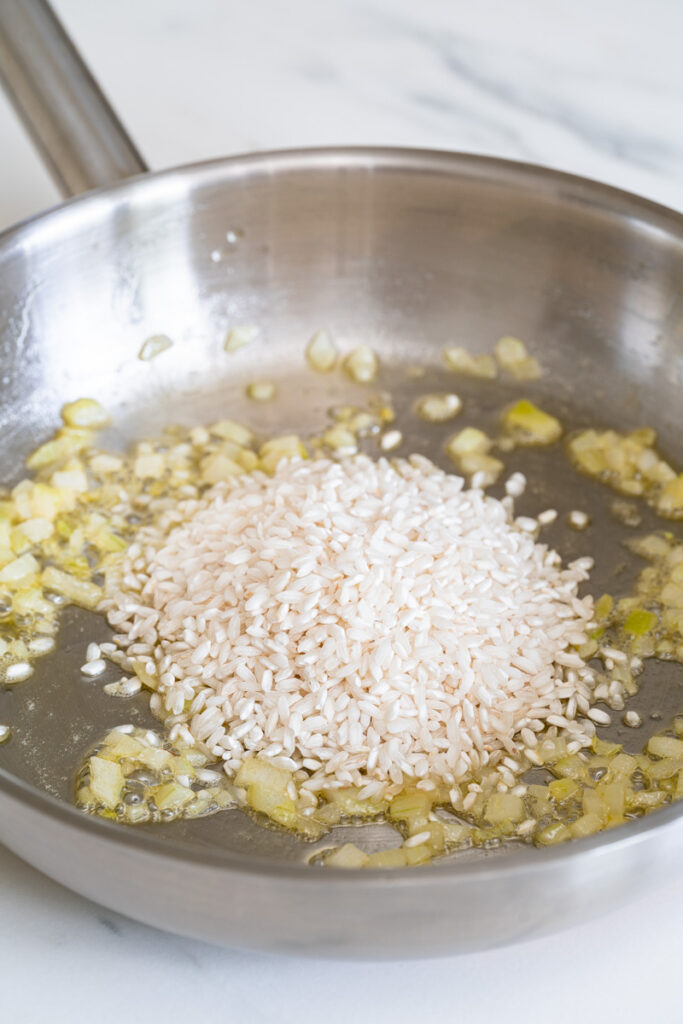
Toast the Rice: Add the rice to the pan and toast for a few minutes, stirring frequently until the grains are slightly translucent.

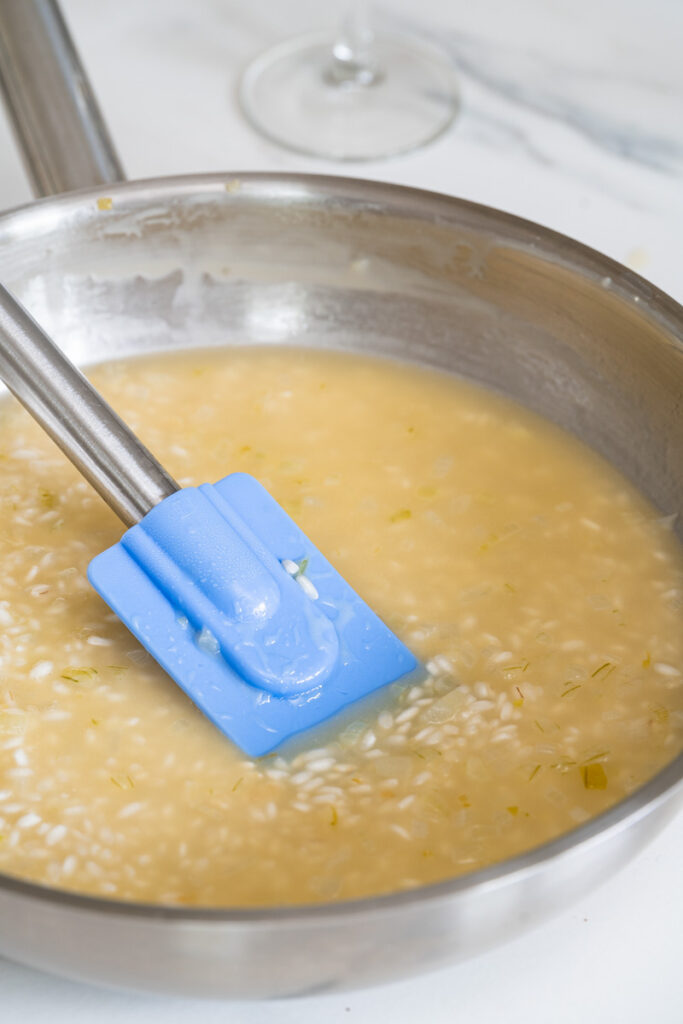
Deglaze and Simmer: Deglaze the skillet with white wine, stirring until fully absorbed. Add half a cup of warm chicken stock and stir continuously until the rice absorbs the liquid. Add another half cup of stock and continue the same process, adding liquid gradually until the rice is cooked but still al dente (just under 20 minutes).
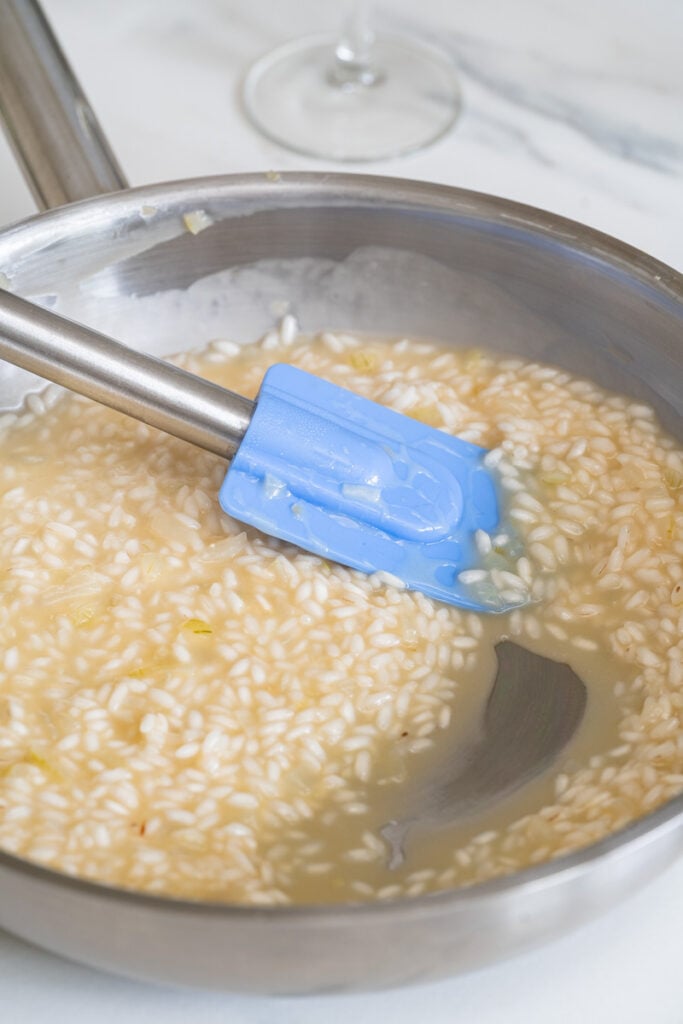
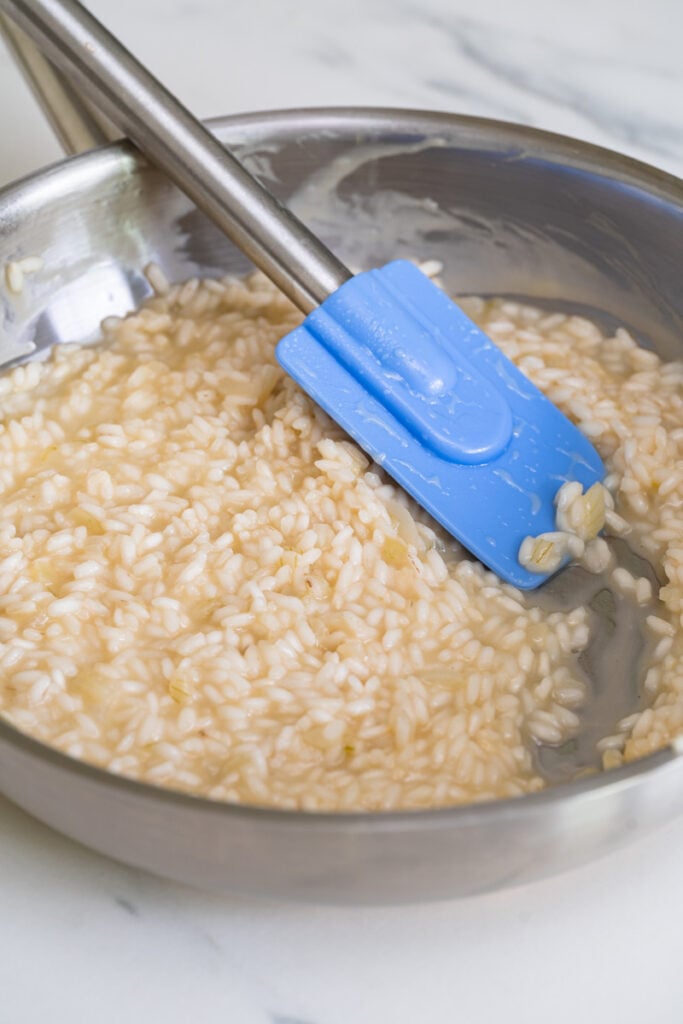

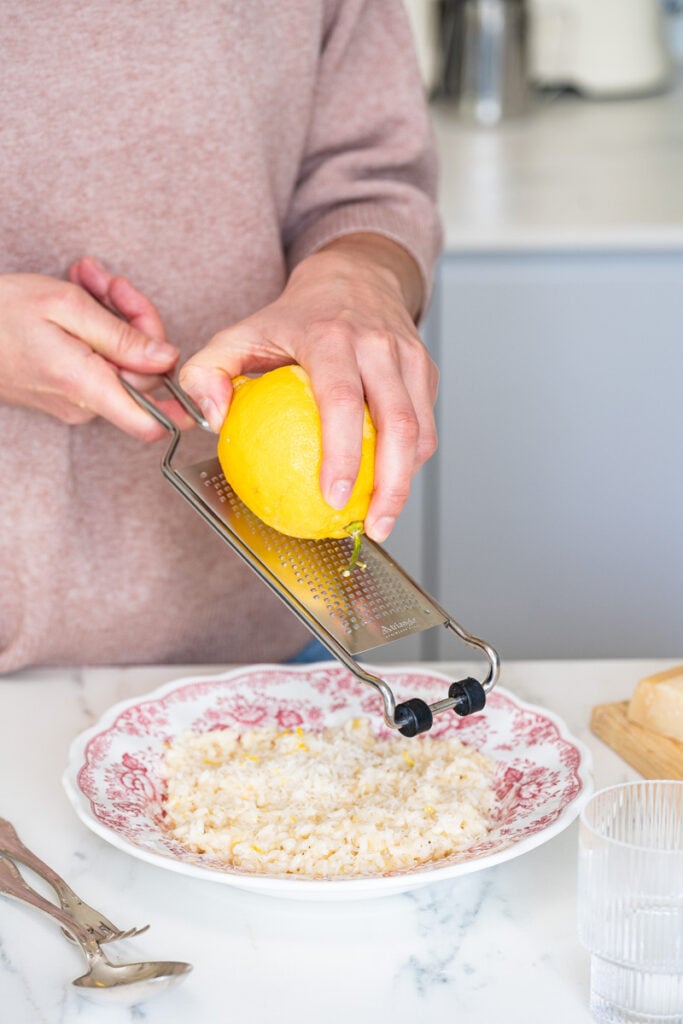
Finish and Serve: Once the rice is tender (with a slight bite a.k.a. Al dente), stir in the remaining butter, Parmesan cheese, lemon zest, lemon juice, salt and pepper. Serve immediately.

Géraldine’s Tips
- Don’t Caramelize: It’s important not to caramelize the onions nor the rice. Keep the heat medium-low and stir continuously to ensure the onions and rice remain pale and do not color the risotto.
- Toasting Matters: Toasting the rice is crucial. This step allows the rice to release its starch, which naturally binds the rice and creates the creamy texture that’s desired in a risotto.
- Take your time: Adding the liquid gradually and waiting for the rice to absorb it is the key to avoiding a mushy risotto.
Serving Suggestion
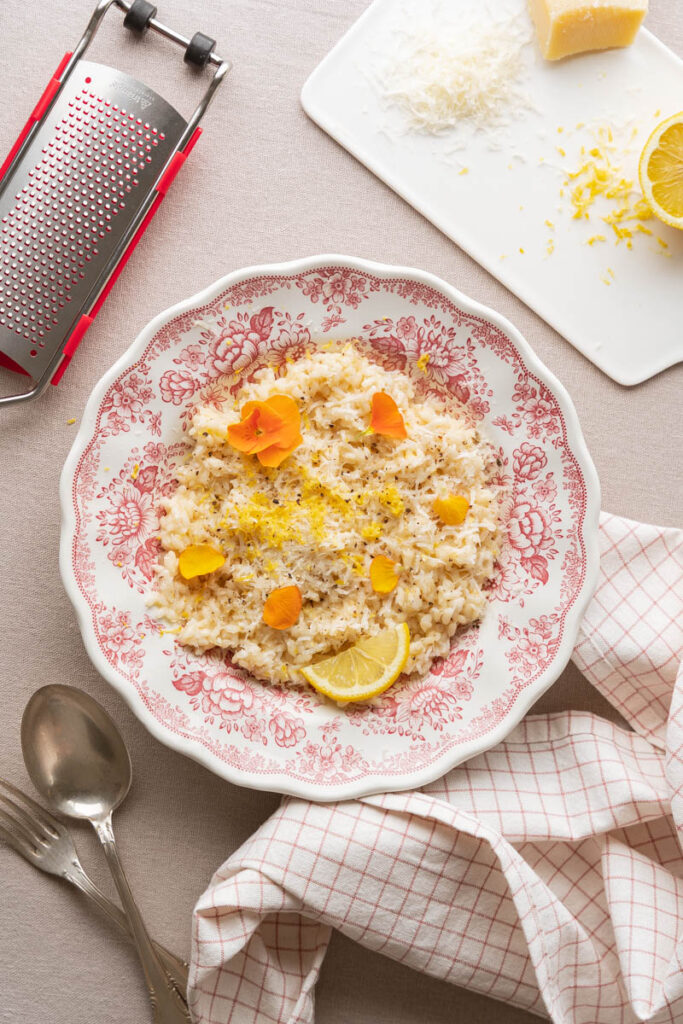
This easy lemon risotto can be served as a main course or as a side dish. Here are some suggestions:
- Add pan-seared asparagus to complement the lemon risotto.
- Serve the lemon risotto with salmon or a roast chicken for a main dish.
- Another favorite topping for this risotto are shrimps sautéed with garlic.
More Italian recipes
- Italian Sausage Pasta
- Broccoli Pasta (Italian recipe)
- Focaccia with Oregano
- Burrata Sandwich with Pesto and Tomato
FAQs: Creamy Lemon and Parmesan Risotto
The best rice for making risotto are Arborio, Carnaroli, and Vialone Nano. These varieties have a high starch content that helps create the creamy texture typical of risotto.
Risotto is best served immediately as risotto loses its delicate texture upon reheating. If preparing ahead, stop after adding the first ladle of broth, let the rice absorb the liquid, and reheat gently over low heat later, adding the remaining liquid as needed.
You can store your leftover risotto in an airtight container in the fridge up to 3 days. Instead of reheating your risotto which will be dry and dense, I recommend to try to make arancini (crispy rice balls) or a rice pancake.
Don’t hesitate to leave me a comment, it always makes me happy!

You can also find me on Instagram, Facebook and TikTok to see behind the scenes of my blog
Recipe card
Creamy Lemon and Parmesan Risotto
Click on the stars to rate!

Ingredients
- 3/4 cup Arborio rice or any risotto rice (150 g)
- 1/2 small white onion chopped
- 1 tablespoon of olive oil
- 2 tablespoons of butter
- 1/2 cup dry white wine (120 ml)
- 1 2/3 cups chicken broth warm, more if needed (400 ml)
- 1/3 cup Parmesan cheese , grated (30 g)
- Zest of one lemon
- 2 tablespoons of lemon juice
- Salt
- Pepper
Instructions
- Start by sautéing the onion in a large skillet with olive oil and a small tablespoon of butter over medium heat. Cook until the onion becomes soft and translucent.
- Add the raw rice to the skillet and toast it for 2-3 minutes until the grains start to become slightly translucent o the edges. Be careful not to let the rice brown.
- Deglaze the skillet with the white wine, stirring well to incorporate. Allow the rice to absorb the wine.
- Begin adding the warm broth gradually, about half a cup at a time, stirring continuously until each addition of broth is absorbed by the rice.
- Repeat this process until the rice is cooked to a tender, creamy consistency (a bit less than 20 minutes).
- Once the rice is cooked, stir in the remaining butter, grated Parmesan cheese, and a pinch of salt. Mix well until the cheese is melted and the risotto is creamy.
- Finish the risotto by adding a splash of fresh lemon juice and the lemon peel for a bright, citrusy flavor.
- Serve the lemon and parmesan risotto immediately while it’s warm and creamy.

