
Ratatouille, traditional recipe
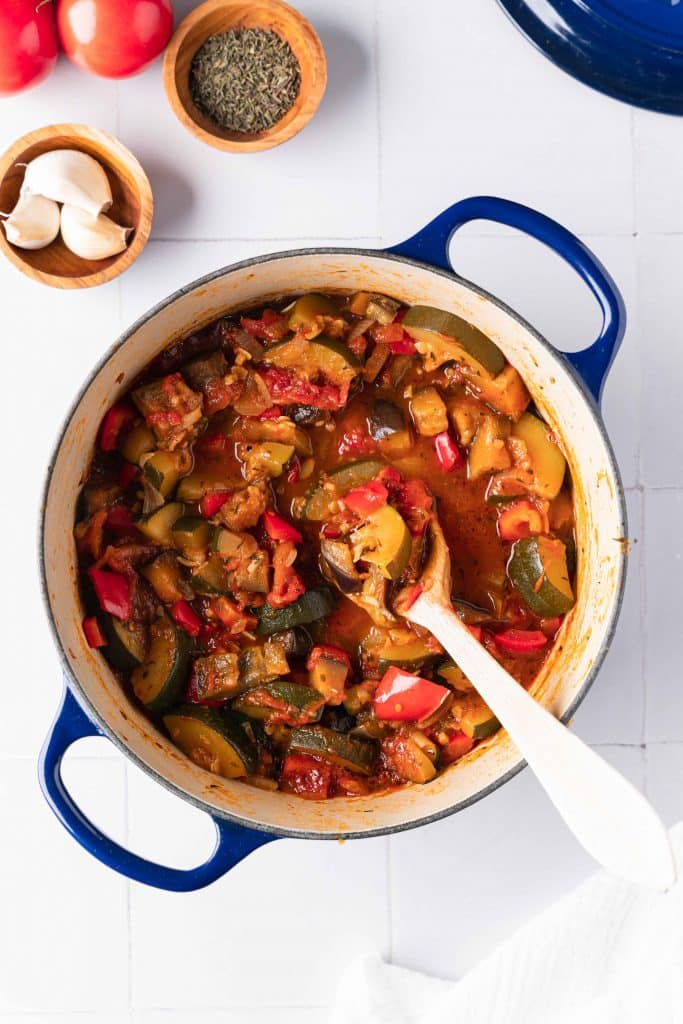
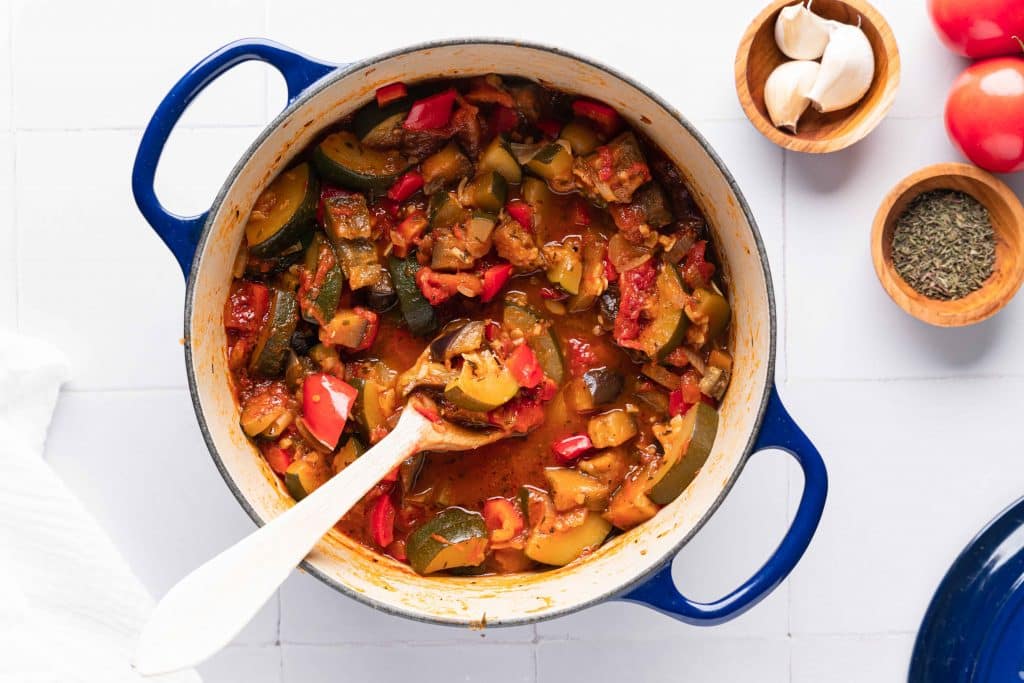
It is one of the most typical dishes of Provence: the ratatouille! It is also one of the first dishes I learned to cook with my mom. So I’ll share with you my recipe for a traditional Ratatouille.
Where does ratatouille come from?
Ratatouille is a typical dish of Provence! It is simply a mix of vegetables typical of the South of France (courgette, eggplant, bell peppers) cooked and served together. In fact, the name “ratatouille” comes from the verb “touiller” which means to stir.
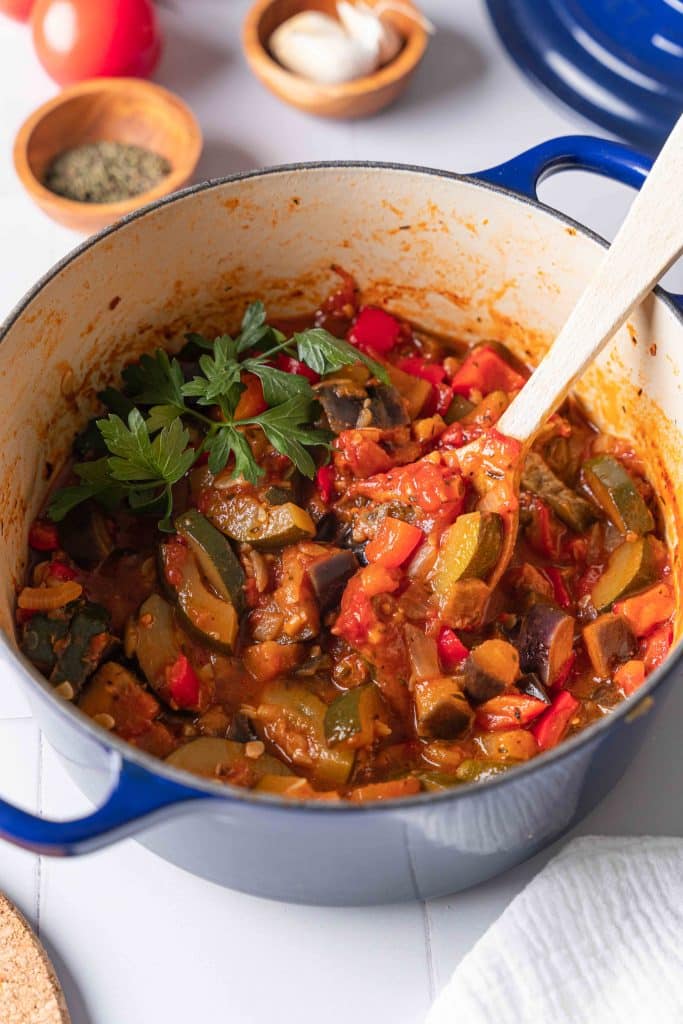
Basically, it is a simple unpretentious dish, often served as a side dish. Recipes similar to this traditional ratatouille can be found in other countries such as Spain with the pisto and in Greece with the briam.
Should the vegetables be cooked separately?
Of course, you don’t have to cook the vegetables separately to make a delicious ratatouille!
Some say that the original recipe calls for cooking each vegetable separately and mixing them only at the end. This allows each vegetable to keep its consistency and prevents some vegetables, such as courgette, from melting too much during cooking.
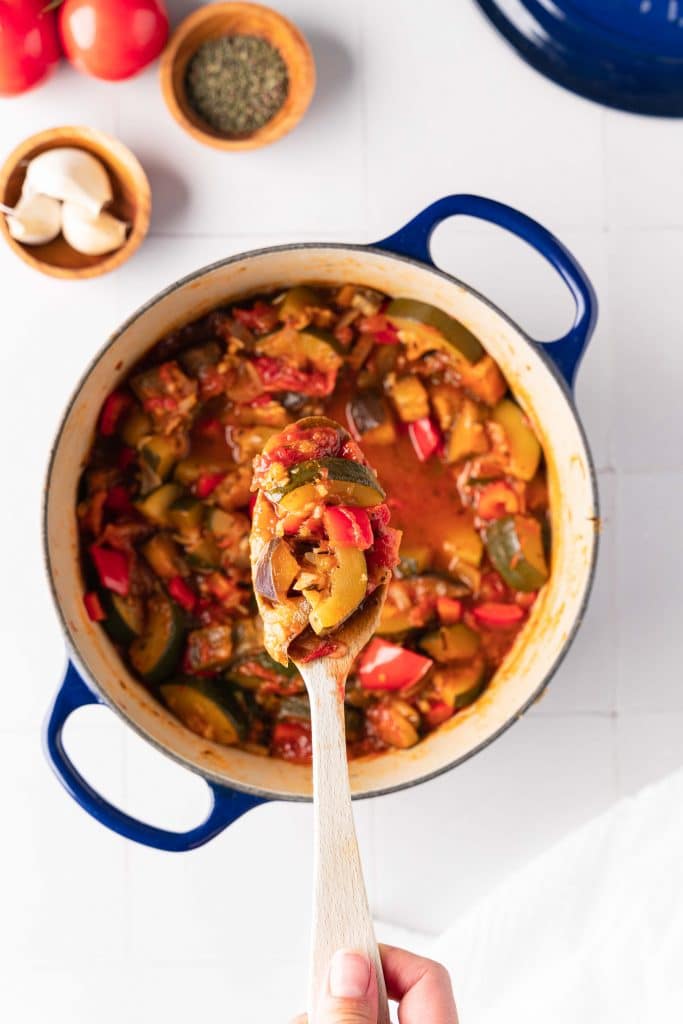
However, as explained above, ratatouille is a simple dish that does not necessarily require hours in the oven and therefore does not require cooking each vegetable one by one.
Moreover, cooking the vegetables together allows the aromas of each vegetable to blend well and gives this delicious taste so particular to the ratatouille.
To avoid this, I have a few tips below!
The ingredients of a traditional ratatouille
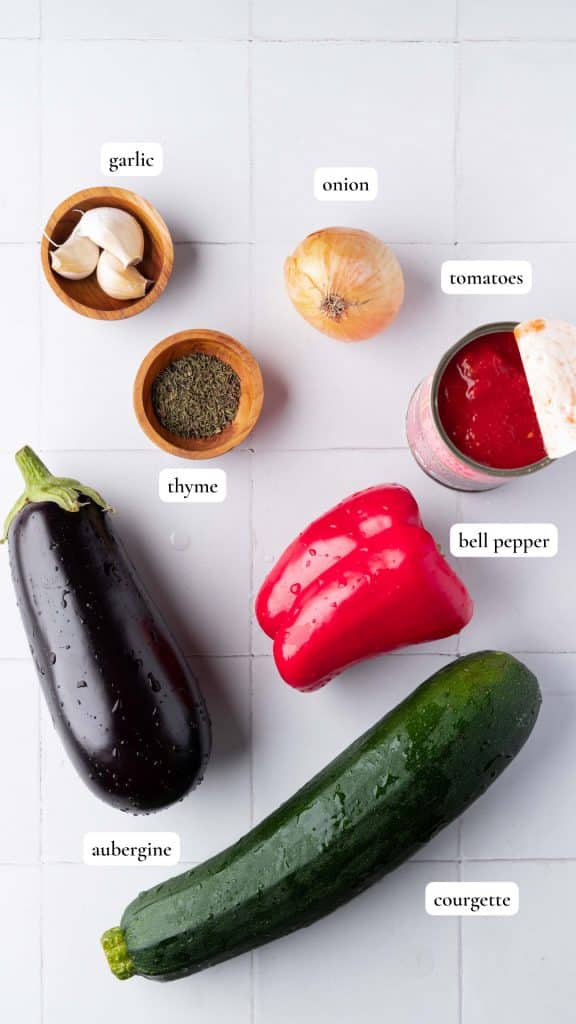
To make a traditional ratatouille, you need the following ingredients: eggplant, courgette, bell pepper, tomatoes, onion and garlic. For cooking, I use olive oil.
How can I prevent my vegetables from melting during cooking?
The art of ratatouille is to obtain tender vegetables without turning them into puree! For this, it is important to cut the vegetables according to their cooking time.
Eggplant is the vegetable that requires the most cooking, it should not be cut too big. Cubes of about 2 cm are sufficient.

Courgette cooks much faster. You must therefore cut it relatively large, that is to say in slices of 1 cm wide. It will keep its texture when cooked.
For the bell pepper, cubes of 2 to 3 cm. This one cooks at about the same time as the courgette.
More Provencal recipes
- Vegetable Tian à la Provençale
- French Galette with Tomatoes,
- Green Tapenade with Anchovies and Capers
- Pissaladière or Pizza with Onions and Anchovies
- Tarragon Pesto
Traditional Ratatouille Recipe
For 6 servings you need the following ingredients.
Ingredients
- 1 eggplant
- 2 small courgettes or 1 large courgette
- 1 red pepper
- 400 g whole tomatoes, canned or fresh
- 1 yellow onion
- 3 cloves of garlic
- 1 tablespoon of dried thyme
- Salt and pepper
- Olive oil
Preparation
- Cut the eggplant into 2 cm cubes. You can let it drain with coarse salt while you prepare the rest. To do this, place the eggplant cubes in a bowl with a generous pinch of coarse salt. Leave to rest for 15 minutes. Then, remove the water and excess coarse salt with paper towels.
- Cut the courgette into rounds. These should not be too thin to prevent the courgette from melting during cooking. Cut the bell pepper into cubes as well. Slice the onion and chop the garlic.
- In a saucepan or a pot, add a drizzle olive oil. Add onion and garlic and sauté for 2 minutes. Then add the eggplants and sauté them for 5 minutes.
- Then add the courgette and bell pepper. Sauté for 2 minutes. Then pour in the tomatoes. Then add the thyme, salt and pepper. Mix everything well. Close with a lid and let it cook on low heat for 1 hour.
- Remove the lid for the last 10 minutes of cooking. Check the seasoning of the rataotuille and add a final drizzle of olive oil.
Note
Serve this ratatouille as a side dish. If you have leftovers, you can make this Vegetarian Ratatouille Bowl.

Frequently Asked Questions
How long does this traditional ratatouille keep?
This ratatouille can be kept for 5 days in the refrigerator. Keep it in a closed container. You can then reheat it in the microwave, in a pan or a pot.
Ratatouille can also be eaten cold, served on toasted bread!
Can we freeze ratatouille?
Yes, you can! This is a very good idea to be able to enjoy summer vegetables during the winter.
I don’t like peppers, can I remove them?
Yes, you can! If you don’t like any of the vegetables (courgette, bell pepper or eggplant), you can remove them or replace them with other seasonal vegetables.
Don’t hesitate to leave me a comment, it always makes me happy!

You can also find me on Instagram, Facebook and TikTok to see behind the scenes of my blog
Ratatouille, traditional recipe
Click on the stars to rate!
Ingredients
- 1 eggplant
- 2 small courgettes or 1 large courgette
- 1 red pepper
- 400 g whole tomatoes canned or fresh
- 1 yellow onion
- 3 cloves of garlic
- 1 tablespoon of dried thyme
- Salt and pepper
- Olive oil
Instructions
- Cut the eggplant into 2 cm cubes. You can let it drain with coarse salt while you prepare the rest. To do this, place the eggplant cubes in a bowl with a generous pinch of coarse salt. Leave to rest for 15 minutes. Then, remove the water and excess coarse salt with paper towels.
- Cut the courgette into rounds. These should not be too thin to prevent the courgette from melting during cooking. Cut the bell pepper into cubes as well. Slice the onion and chop the garlic.
- In a saucepan or a pot, add a drizzle olive oil. Add onion and garlic and sauté for 2 minutes. Then add the eggplants and sauté them for 5 minutes.
- Then add the courgette and bell pepper. Sauté for 2 minutes. Then pour in the tomatoes. Then add the thyme, salt and pepper. Mix everything well. Close with a lid and let it cook on low heat for 1 hour.
- Remove the lid for the last 10 minutes of cooking. Check the seasoning of the rataotuille and add a final drizzle of olive oil.

